Pages

Showing posts with label books. Show all posts

Thursday, November 15, 2012

Books you should have read already: Palimpsest


These write ups are good for both of us, dear reader. You're getting exposed to books that you most likely have not read and now know you should. I'm reflecting on my past readings a bit more than usual and am learning from it. It seems that there is a common thread in this section of "ambiance" books. They're both about places rather than people.

That's not to say that the people are poorly written. And, it can be said, that these places are so fleshed out as to be characters in these books.  But the first book as about a circus and this book is about a city. When I was told of this book it was explained that Palimpsest was a sexually transmitted city. That's not really giving Palimpsest the description it deserves; that's just a single perspective. Palimpsest is a refuge and a prison and an escape. The way to this place is to have sex with someone who's been there. Afterward the person will develop a blemish in the shape of a street map and will soon dream of this city. You don't have a choice about going there and if you want to return you don't have a choice about whom to sleep with. It's a refuge and a prison.

The city itself is a strange place. Sure it's a magic city and things are strange but even beyond that all of the visitors are not quite normal. Because of the way to get there it means that all non-residents are either new and lost or full of desire. Each person is out of a comfort zone and that makes the city vibrate with an energy that could never be sustained in the waking world. And it's a lot of fun to look at. Escher made physical locations that could not physically exist. This is more like an emotional Escher image.

I suppose it's urban fantasy but in the sense that it's fantasy about "urban". The main character is a city. The story revolves around people using each other and the city to find or lose themselves. City city city. So it's not "urban fantasy" in the way that it has come to be know (read: trashy or pulp). It's fantasy delving into the concept of urban and urban resident.

Wednesday, November 14, 2012

Books you should have already read: The Night Circus

And so we begin the ambiance section. This small section (it will be two titles) is about books where the overall feeling is what makes the book worth reading. So let's start with:

The Night Circus


The night circus is one of what seems to be a growing number of a new fiction subgenre: Circus Fantasy. I'm sure this has been done in the past but circuses seem in vogue in the underground now. But anyway, back to this circus.

The Night Circus is a fantastical creation that is elegant and timeless, possibly literally. It is a secretive machine of people who are dedicated to being part of this elegant machine. And that's about it. If that seems a bit like a perpetual motion of souls then you're spot on. The circus is more about being a kind of circus than actually being a functional circus. It's built up not by what it offers but what is not there. There is a very controlled, small color palette. Sounds are infrequently described leading to a muted feeling. The Night Circus is a place defined by being a roaming void of normality. It's a hole that pulls people out of their lives and out of the mundane.

I hope you're starting to see why this book fits into this section of reviews. The entire novel touches on many lives and how they're affected from visiting or working with the circus but more than that it's just a long presentation of the feeling these people get when they visit. And all of that is conveyed exceptionally well. Once I gave myself over to the general feeling of the book I really enjoyed it. The problem is that I was waiting for the story to kick in for about one hundred fifty pages before I realized what was going on. So keep that in mind when you pick this one up.

Tuesday, November 13, 2012

Books you should have already read: The Atheist's Guide to Christmas


I adore this collection of essays. It’s not just for atheists. It’s not all about Christmas. And there’s something for everyone. Everyone everyone? Yes. I pretty much hate Christmas and still loved this book.

What I mean by that is the book is broken up into sections. There's:


  • Stories
  • Science
  • How To
  • Philosophy
  • Arts
  • Events
This breakdown is what makes the book so great. It's not that each story or essay isn't wonderful. It's that depending on who you are it might be something similar to what you've already read or it might just be out of your interest area. I, for example, skimmed most of the Events section while taking my time in the Arts and Stories and How To areas.

This really is a good anthology. One of the funniest stories in here is "How to Have the Perfect Jewish Christmas". It's a great anecdote that both lambastes and celebrates some weird issues I have found in Judaism with a great use of the term "kestrel". "An Atheist at the Movies" is a fun run through atheist cinema and Phil Plait's "Starry, Starry Night" is deliciously nerdy and touching. Simon Le Bon's "Losing My Faith" is nice introspective recalling of losing his faith but finding himself intact. And do yourself a favor and read "How To Understand Christmas: A Scientific Overview". Really.

See, something for everyone. The Events section came across as a bit too dry to me but it might strike your fancy. And even if it's not your usual subject, give the Science section a go. It's got some great pieces in there. Even if atheism isn't normally your thing I would still recommend this book. It has a lot of truly universal essays on finding yourself, the value of family, and how much tradition should count for. If the word "atheist" turns you off then just replace it with "humanist" and try again.

Bonus trivial: It's the first ebook that my wife read

Monday, November 12, 2012

Books you should have read already: Machine of Death


Short story collections are hard to review. Each story is different, each author has a different tone. With this collection there are some misses but so many of them are hits, and those hits are great.

The concept is that a machine has been made. You press a button and out pops a slip of paper that will tell you how you will die. The paper can be vague or misleading. The story can be about world building or a character study. And that’s it.

I don’t have a huge amount to say about this book, actually. Since it’s not a novel it doesn't convey an overall theme or thesis. Instead, it’s a loose enough concept that the stories don’t tread on each other. Each one covers different ground but are still tied together by the Machine. I used to read a lot of anthologies and sometimes even a collection of all good stories would feel like a failure. “Best Of”s can be completely unrelated stories so even if they’re good, one after another, there’s nothing connecting the whole thing together and starting the next story can break the pace of the reading experience. Other times the themes can be too tight and they feel contrived (time traveling wizard pets) and only one or two stories will feel fun, the rest feel like a writing exercise.

Machine of Death is not just a collection of good stories, it’s a good collection. There’s a balance between the concept and the freedom. This is something that other anthologies should aspire to.

And hell, you can get a PDF of it for free over here. You cheap bastards.

Friday, November 9, 2012

Books you should have read already: Ready Player One


If you can imagine a Cory Doctorow novel that has less technical agenda and more pop-culture fun then you can imagine this book and you should read it. If you can't then I'll write a review for it.

The story is this: it's the future. The world has gone on but class differences are huge and the environment is pretty bad. A while back some brilliant and eccentric man invented  something that's like a cross between World of Warcraft and Second Life. And even stranger is that it caught on globally. Some public schools are hosted in this virtual world. And then the creator dies and everything goes all Willy Wonka.

You see, the creator was a huge fan of 1980s pop culture. What is slight nostalgia for us is, in the future, historical nostalgia for him. And it's played out to bizarre extremes. And in the swirls of this obsession he created a scavenger hunt in his online world. The first person to complete the scavenger hunt wins his company. And there are devotees who spend their lives consuming 80s pop culture non-stop, hoping to find a clue that no one else can get.

On one level it's almost a parody of what is now considered hipster culture: knowing insane amounts of minutiae n order to one up everyone else. But in the full context of this story it's actually a love letter to subcultures and nerds. These fans and gamers are nerds for this person and his online creation and, by way of that, are nerds for the 1980s. They share a language and knowledge about things that sets them apart all the more from everyone else and it strengthens them rather than isolating them.

And isolation and community is what this book is all about. You have people competing together and alone for the prize. Nuggets of John Hughs trivia is shared like an expensive gourmet food and horded like cash. Friends can only be team mates to a point before they become each other's competition. And that community of giving, taking, and hunting is so much fun to watch.

Cline could come across as nerd-elite with references for references sake but doesn't. Instead he manages to convey the drive these people have for learning instead of just having a parade of one ups-manship. This book could have easily been terrible. It's not. It's great. The characters breath and the plot rolls along. In addition to all of this the world building is revealed with great pacing, details popping up naturally instead of large data dumps. Or maybe they do come in data dumps but the world earns them because it is a culture and economy of information. Depending on how you look at it, the reader earns trivia about their world as they trade trivia about ours. But however you take the pacing this book is a tightly woven read.

Thursday, November 8, 2012

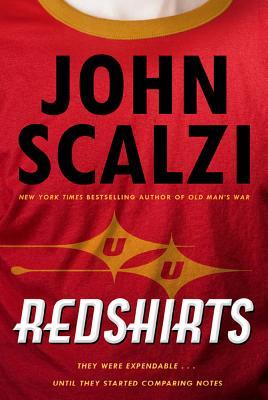
Books you should have read already: Redshirts

Sorry about the delay but, well you know, the hurricane and power outage and all that jazz. But I'm back and I have a fun pick this time.


This is flat out a satire and meta analysis of Star Trek. It takes the tropes and plays them out. But what this novel does is put realistic, logical, aware characters in the field of cliche and formula. And it's hilarious. You can take it as a love note to the franchise or you can take it as a playfully gruff punch on the shoulder to science fiction in general. There's a lot for Star Trek fans but there's more than enough for scifi fans as well.

And that's just the first part. Normally codas are little extras but with this book the three codas are equally as important as the story. They each continue the plot by way of different characters and it's really in these codas where the point of the book comes through. The amount of heartfelt love for the story, characters, and world is great. The story has touching moments but there's a lot of world building and deconstruction. The codas are these nuggets of pure character and each with its own perspective.

It's hard to review a book that's as meta as this. I don't want to come across as selling it as a Star Trek story because it absolutely is not. I don't want to sell it on the amazing irony and deconstruction because it stands on its own as a real science fiction story. It is what it is, and that's a funny, smart, highly entertaining book.

Sunday, October 28, 2012

Books you should have read already: The Flame Alphabet


And now begins the stand alone novels.


The Flame Alphabet is a very hard book to recommend. I want to recommend it to you all, and since I'm writing this I suppose that I am. But, unlike Feed or The Magicians, I don't for a moment believe that this will have the same universal appeal.

The Flame Alphabet's plot is this: There is a plague striking the world, or at least America. The speech of children is striking those that hear it ill as well as leaving a salty residue that spreads in the wind and strikes bare the soil. As time goes on this plague gets worse until the very foundations of communication may become poisonous to all humans.

That doesn't sound too depressing. It's a new take on the apocalypse  In fact, it's a Jewish apocalypse story and it's reflected throughout. There are issues of community through ideas, independent reflection and the meaning of community. It's explicitly Jewish, though some aspects are very twisted to the point of grotesquery and horror.
But it's also a story of a world where isolation not only tears people apart but also makes them confront how alone they are to begin with. That's the scariest part of this book, which isn't explicitly horror though I did find it genuinely scary. The seeds of the main character's sadness and existential dread get traced back to his family before they are split apart by this disease. Think about it, if the speech of children is toxic then how long do you think parents would be able to stand the proximity of their children? How long could children stand to stay and slowly kill their parents? But also, upon reflection, once you can no longer talk to your family- what if you find that your relationship doesn't change as much as you feared?

That's all in this novel. Ben Marcus, the author, does perhaps too good a job at reflecting these themes in the tone of the book. By the end of the novel I was reading chapter after chapter in a single sitting, gnashing my teeth. But early on I had the hardest time getting into the prose. It's dry and depressing and more than slightly sickening. The text felt like the salty air in their world, slowly pulling the moisture from the air and hurting you from the inside. I kept wanting give up on it, rereading the synopsis, and realizing the concept still intrigued me. It took about halfway through before the book and my mind synced up and just clicked together.

So I do recommend this book. Highly. As soon as I completed it I was happy both to be through with it and to have the ideas it planted sitting in my head. In a way it's almost the antithesis of the movie "Butch Cassidy and the Sundance Kid". In that movie the writer set out to create a script that showed two close friends that would ultimately become aware that they don't and can't truly know one another. By the time the writer finished the script he had a story that showed two people who did know each other and he had to reverse his thesis. In The Flame Alphabet we see that not only do some people get pulled apart by the enforced lack of communication but perhaps they were never even close to knowing each other even when they did talk.


I promise the next one will be a lot lighter in tone.

Saturday, October 27, 2012

Books you should have read already: Feed

And now we come to the top series in this run of recommendations.


This series has been a hard sell to most people I recommend it to (which is everyone). It presents itself so strongly as a certain book and it's not. This book takes place after a zombie apocalypse but it's not about zombies. The main characters are reporters and a large portion of world building is devoted to how news media was restructured after the rising of the dead but it's not a media study. The position that sets the group off on their adventure is to follow a politician who is running to be the Republican presidential candidate but it's not a political thriller.

This is technically a hard sci-fi medical thriller. But it's not really that either.

What it really is, is amazing. There are two types of people I know.
  1. People I have recommended it to and have absolutely loved it.
  2. People I have recommended it to and they have not read it.
With complete sincerity I tell you that this book has a 100% "love it" rate by those who I pushed it on and have read it.

Our narrator is Georgia Mason, a sharp edged, hard as nails news blogger who sounds like equal parts Rick Grimes and Hunter S. Thompson. It's 25 years after the zombie uprising. People have survived and learned how to keep living. Everyone is infected. Everyone is scared. And life goes on. The news media was hesitant to admit zombies were real. Sounds too silly. But bloggers jumped on that story and kept people posted. And so bloggers have survived into the new world. Her group lands a prime job, following around Peter Ryman who's fighting for the Republican nominee spot. And then things get intense.

I'm specifically light on plot details because this book absolutely speaks for itself. The Magicians made me fall in love with reading again and this series places a spot above that book.

And when you're done with the trilogy and the two novellas (the prequel takes place at San Diego Comic Con in 2014) then head over to my friend Mark's blog, Mark Reads, and reread it along with his chapter-by-chapter reaction/reviews.

Friday, October 26, 2012

Books you should have read already: The Magicians


The final two series reviews get a bit heavier. This penultimate series is the last fantasy series I'll try to sell you on. It sounds like Harry Potter but actually is incredibly far from it. I'm pretty sure some of the more dissatisfied responses to this book are from people expecting to find the next Hogwarts and instead getting highly flawed, modern literary characters.

The concept is that Quentin Coldwater is a student ready to leave the world of high school and enter college. He has a friend who's dating his crush and they are essentially a trio. But they vanish early on in the story when Quentin gets tested and accepted to Brakebills, a magical college.

In fact, that set of establishing a trope and then tearing it away to see how the characters react is the running theme of the first novel. Quentin is part of a tight knit trio, then they are gone and he must cope. Quentin is expecting his college days to me like Hogwarts but instead it's actually an incredibly dense and difficult curriculum and he's no longer acing tests effortlessly. And each time this reveal and revoke is called upon it makes the characters involved much deeper. Or at least makes them confront their flaws. Like real people, some of the students at Brakebills aren't necessarily looking to constantly be introspective and better themselves. Some want to get laid. Some want to just get by. Some want to put on airs and affectations in order to hide their insecurities.

I won't give away too much of the plot but I will say this. Do not go in expecting Harry Potter. Instead, realize that Quentin loves magic because of a series of books about a magical place called Fillory. It's a very thinly veiled substitute for the Narnia books, right down to the heavy handed Christian allegories. And it is this series that plants the seeds of what magic and wonder should be for Quentin and therefore influence The Magicians. These books have adventure but it is almost despite the characters, not because of them. While adventures seem like a great idea on paper most people wouldn't want to throw themselves out of their comfort zones and place their lives in jeopardy just as they're discovering magic and, by way of it, a life of unimaginable luxury and metaphysical academia. The conflict in these books, like most things, is a reveal and revoke. You see an adventure coming and then it's here. But it's the internal clash that everyone has to face because these adventures where the real story resides.

Another way to put this book in context. When I reread it this book was perhaps one of 4 novels I had reread in my adult life. This first book in this series is what set me evangelizing books again.

Thursday, October 25, 2012

Books you should have read already: Skulduggery Pleasant


Young adult "chosen one" fantasy series are a dime a dozen. Before dystopian (Divergent, Hunger Games, Uglies, Delirium, Maze Runner, Cinder, Incarceron, City of Ember, etc) was in vogue you couldn't swing a dead house elf without hitting one. And as much as I enjoy the world of Harry Potter I will flat out admit that
[off topic criticism redacted]
So what does Skulduggery Pleasant have that sets it apart? So, so much. There' darkness, a snarky narrative that doesn't talk down, fantastic humor, more snark, interesting characters infused with magic, dynamic characters that have long term character arcs and sometimes relapse with lasting consequences. And snark.

In short, I was very nearly mad when I finished this book. I was so close to furious that I hadn't written it that the only reason I didn't tear it in half was that it was too damned good. I have laughed out loud while reading this series. I have gotten attached to these characters. Oh, fine, let me tell you a little about them.

Stephanie Edgley is the protagonist we follow. She's 12 at the time and her uncle Gordon has just died. Gordon was a horror writer but upon inheriting his estate, Stephanie finds out that much of what he wrote was based on the people he knew well. Soon Stephanie finds herself involved in the policing of this magical underworld of Ireland by way of Gordon's friend Skulduggery Pleasant. He's a smart ass, has a questionable past and is a well dressed skeleton.

The minor characters just flesh out the world with depth. Rather than trying to saddle Stephanie with some sort of male foil/romantic interest we are given Tanith Low, who becomes a running sister figure. In the later books Stephanie does meet some interesting male characters but her independence is never compromised and becomes a strong sticking point to her relationships. There's also a wonderful bit that brutally addresses some of the themes that are romanticized in Twilight.

Later on we have side characters that change allegiances with lasting consequences, studies on the effects of self sacrifice and whether self destructive behavior is warranted and when. This shit gets dark, all the while getting deeper and deeper into the world.

And unlike Harry Potter it does get around to dealing with the issues of superiority in the world between magical and mortal. It seems strange that in Rowling's world the magic community has this bizarre reverence for the non-magical people and practices. It seems pretty obvious that in that world magic is plainly superior. Well, that's not something Landy ignores. When crossing over to this magical new world what reasons would you need to go back? How important would your family life be when actually offered the chance to run off, live for centuries, and physically control the elements as well as life and death?

But don't get the wrong idea. These books are YA fantasy. They are adventure stories and they are, without hesitation, fun. I also recently gave away my dead tree edition of the first novel which just goes to show you how invested I am in sharing the wealth of this serie

Wednesday, October 24, 2012

Books you should have read already: Libriomancer

I consume what could be described as "copious amounts of media". I go through movies, TV series, and books. Part of this is due to my mastery over the mystical powers of insomnia. Some of it is just due to me loving the feeling of finding amazing stories. I also love seeing someone else discover something that they love, hence my constant recommendations to people. Movies and TV are easy. They tend to be social in that people get together to watch things. Books are a more solitary sport. People don't really have parties where they gather in groups and all sit down to read.

What I'm doing here is codifying recommendations of things I've read in the past year or so and I'll be grouping them in the following way:

  • series
  • stand alone
  • collections
  • ambiance
I will start with "series" and I will work my way from weakest to strongest recommendation. Of course, take that in context. That's the weakest "you should have already read this".

Oh, and if any of you are down with the e-readers, let me know. I might be able to help you out.


I suppose this one counts for part of a series though there's only one book out at the moment. More than anything this book is cute. It's a smart take on magic and literature. The concept is that there's a class of modern sorcerers that can use collective belief and have focused that through books. The more people read and put emotion into stories the easier it is for them to pull out artifacts from the books. They are libriomancers. The actual story isn't astounding. The world itself isn't even as compelling as some other fantasy I've read. But there are parts to this book that shine.

The concept itself is a meta-aware love letter to readers themselves. The idea that the more invested people are in a book the more real it becomes (now literally) should speak to all readers. The author even plays around with that, touching on intent of the writer affecting the prose as well as self publishing.

But there's also another layer to this toying with tropes and creation. I won't regurgitate the character description but the side kick is an interesting take on the hot, sexy, magical urban fantasy female. For that alone I know some of my friends will love this.

And something else that impressed me was that Hines actually has characters that try to find and push the boundaries of their magical system. While one would think that this would be something nearly every strong, magic wielding character would try it's actually quite rare in fantasy. For the most part inhabitants of magical worlds are satisfied to learn the basics and use magic exactly as the instruction manual says to. But Hines realizes that his magicians are creative types. It seems that the standard cover for libriomancers are book store and library workers. How many of those people do you know that don't write? So of course you should have experimentation going on when your self selected magical population is mentally set to play games with power and concepts.

Of course, there's the added bonus that many of the items pulled out of books and used as tools are from real novels. So playing "spot the reference" is a bonus game woven into the text.

I don't want to talk this book up too much. I know this blog series is called "books you should have read already" and with a title like that there's a certain level of expectation established. This book, I feel, is not quite the sum of its parts. I finished the book feeling fair about it. I wasn't blown away and the story was good enough. But it stuck with me and it wasn't until I really thought about what I liked in it that I appreciated  Libriomancer more and more. Feel free to insert your own comment about this criticism being a parallel to the way in which libriomancers reach into books and extract the parts that resonate and give power. I just realized that too.


For more on pushing and exploring magical systems see "Harry Potter and the Methods of Rationality". It's ongoing, long and probably drier than many of you will want to deal with (natural born salesman right here!) but it's incredibly interesting. It also shows how utterly thin some popular fantasy realms really can be.

Wednesday, June 27, 2012

Casting Feed

This won't mean much to those who haven't read Feed and the subsequent books. But if you haven't then you should feel a bit left out, like you're missing out on something, because you are. It's a fantastic series and it should either be in your hands or already inside your heads.

Now that the Newsflesh series has been optioned for film the wife and I spent most of our waiting in line moments at Hershey Park (rain and maintenance delays leave a bit of thumb twiddling time) driving ourselves mad trying to figure out who should be cast. We've been refining it since then as we've both been finishing up the series.So here's the list of characters we tackled and who who we came up with.

Sean Mason - Thomas Dekker

Georgia Mason - Allison Scagliotti

Georgette "Buffy" Meissonier - Leven Rambin Alona Tal

Mahir Gowda - Alessandro Juliani (Not Indian) Sendhil Ramamurthy (too old) Aziz Ansari

Nandini "Nan" Gowda - Rekha Sharma

Dr. Kelly Connolly - Anna Kendrick

Senator Peter Ryman - Stephen Moyer Jon Hamm

Emily Ryman - Lauren Graham

Rick Cousins - Tom Hiddleston

Rebecca "Becks" Atherton - Emma Stone

Alaric Kwong - John Cho (too old, but doesn't look it, but I can't think of any other age appropriate Asian actors)

Dave Novakowski - Neil Grayston

Magdalene "Maggie" Garcia - Natalie Morales

Dr. Shannon Abbey - Melissa McCarthy

Stacy Mason - Teri Hatcher

Michael Mason - Alan Tudyk

Saturday, January 21, 2012

Review of 11/22/63 by Stephen King


11/22/63

by Stephen King

*possible spoilers*

I've recently read a string of mediocre novels and put out a call for something to really enjoy. I was recommended 11/22/63 bu Stephen King. I approached it with apprehension. There are a number of things about this book that would have stopped me from picking it up on my own. It's historical fiction, which I generally find dull. It's first person which I see as an over used style to let the author feign the depth of a main character by making everything seem more immediate and intense. And it's by Stephen King.

I don't think I've read king since I was maybe 14 at the latest and when I did it was to put me to sleep. I have always found him heavy handed, long winded, nostalgic to the point of laughable, and formulaic. I was willing to give him a second chance and was told that this was the novel to win me over.

It wasn't.

The basic story is that a man steps through a literal door in time that takes him back to the late 50s and he plans on using this to stop the Kennedy assassination. See the title? Good. And from that I was actually interested. I put aside my reservations and plowed through this thing. And I was surprised that the Kennedy story was actually pretty darned good. But there's a problem.

The problem is that Stephen King gets in the way of the story. Literally. The entire first act of this tome is a complete waste where King sets the main character up to be himself. He goes to a small town that has a general sense of foreboding, finds that something possible magical and definitely evil is driving people to victimize children. He encounters friends that have some sort of magical power. There are comments about a clown that lives in the sewers and kills the kids. It is literally all stuff that we've seen before.

This town becomes the cover story the time traveler uses. He presents himself as a writer who is penning IT. Then the book focuses on a romance starting with the next act. I suppose it's necessary as he has no actual motivation for going into the past other than a diner cook tells him that stopping the assassination would make the future a much nicer place. With the romance he now has a reason to spend years hiding out until the trip to Dallas. But this romance gets in the way of both his mission and the furthering of the story. He splits his time between his girlfriend and his mission and therefore the narrative gets watered down as well. He's not a compelling person (he's King's avatar) and spends more than half his time trying to make a life for himself in the past.

I got bored waiting for the author and the main character to get back to their mission. Eventually they do but, thanks to King's need to make his settings vaguely sinister, time itself sends car accidents and unfortunate minutiae to thwart his attempts to change things. Maybe it's because I've read science fiction before but I found this turn a trite one to add drama and conflict where there was none. I won't say what the outcome of his rescue attempt is but I will say this: after the climax there's a halfhearted attempt to show a bigger picture that fails terribly. It comes far to late and doesn't hold up without further explanation. Which never comes. Instead there's a wistful, and essentially pointless, denouement. Perhaps it would have been a more satisfying  ending if I had picked up what I thought was to be a romance centered novel but I didn't. I was sold and signed up for a time travel/historical story. It's like going to see Back to the Future Part 2 and instead seeing a showing of Somewhere in Time.

On a scale of -5 to +5 stars 11/22/63 gets -2.
I would have given it a -1 but I was interested in the Kennedy plot so I was really bothered when King failed to deliver on it.

Thursday, January 12, 2012

Time Travel Made Easy

I recently started 11/22/63 by Stephen King. The plot is a man is presented with a door that leads back in time and he goes through it in order to stop JFK from being assassinated. I’ll leave the critique of King for another time, but one thing that stood out to me was that he spends about 10-15 pages explaining the concept of “travel back in time to change the future” by way of "watershed event" and "butterfly effect". While the process of making those changes can be complicated and convoluted the idea that things in the past will affect the future is a pretty simple one. It’s no different than something in the present changing the future.

And then I realized that King actually puts a lot into this book to explain in unnecessarily long passages the most basic concepts of science fiction, concepts that should easily be picked up through the story. The huge data dump in the beginning of the novel shouldn’t be needed. And then I realized that King has made the same mistake that a lot of people make. He thinks time travel is complicated.

Time travel is simple.

Oops. I’ve let out the secret. But truly, the basics of time travel really aren’t that difficult. Sure, you can wind the narrative around obfuscation and overlapping trips, like in the wonderfully infuriating Primer, but the basics are always easy to grasp. Any storyteller that pretends otherwise is either trying to seem overly clever for dealing with it, doesn’t get it themselves, or thinks their audience is pretty dim. So here’s the breakdown.

The bottom most level of time travel is moving from one point in time to another but not in the usual way. We all deal with regular time travel which is into the future at the speed of one second every second. In H.G. Wells’ The Time Machine we get a really nice visual of someone sitting in a chair and watching time rewind as well as fast forward. The rate is changed. There are also instantaneous jumps in time travel fiction. That would be like Doctor Who, Back to the Future, Time Bandits… the list goes on quite a bit. Even King’s 11/22/63 has this. Step through a door and you’re decades in the past. Fast as that.

Where it gets a little more complicated is what kind of time the character is travel through. But don’t worry, it’s still a much simpler concept than most people expect. A lot of time different versions of time are rationalized or justified with technobable but that’s like putting fancy clothes on a mannequin. The model underneath is almost always eerily simple and usually one of three choices. With mannequins it’s man, woman or child. With time I’ve named the three fundamental forms solid, liquid and gas.

  • Solid – Time is completely unchanging. If you go back in time and do something then you were there before and that action has already happened. Time travel is a closed loop. There is no free will, everything is predetermined. Or at least determined the first time events occur.
    • If you travel back and step on an early amphibian then that animal had already died in the past.
    • Examples
      • Time Traveler’s Wife
      • Harry Potter and the Prisoner of Azkaban
      • Bill & Ted's Excellent Adventure - Since they come back to the present and nothing noticeable has changed we know that it is either a solid or liquid timeline. Small details, like their time loop escape from the jail cell seems to suggest a solid timeline.
  • Liquid – Events can be changed but small changes will get passed over. You can visit and things won’t change but if you make a large change then it will affect the future.
    • If you travel back and step on an early amphibian then another will end up evolving to eventually fill a similar role in history.
    • Examples
      • Quantum Leap
      • Back to the Future
  • Gas – Every little thing a future visitor does in the past will have consequences in the future. This is the scenario where the butterfly effect is often brought up.
    • If you travel back and step on an early amphibian then perhaps you will return to a future of intelligent sea life. Or there will be no life at all.
    • Examples
      • A Sound of Thunder by Ray Bradbury
      • Time and Punishment, the Simpsons parody of the above short story
  • Uncertain
    • Doctor Who - The very definition of inconsistency for the sake of a story. This universe seems to vacillate between 
    • Primer - Evidently a malleable timeline though the range is so short it's impossible to tell the extent of changes to the future.
    • Star Trek
      • Solid or liquid. The novelization of Star Trek IV: The Voyage Home (the one with the whales) suggests a solid universe as the employee Scott gives the formula for transparent aluminium to is the historically credited inventor.
        HOWEVER! The new Star Trek begins with an event that branches the timeline so the new Trek movies take place in a changeable timeline. Since the crew still gets together I'm going to call it as liquid.
And that is the basic gist of time travel. Once you figure out the material of time then the events should just fit into the template. Of course, some fictional universe will change their physics. The Terminator universe is notorious for this. The first movie is a solid (possibly). Kyle Reese seems to always be John Connor’s father. His trip back and sleeping the Sara Connor is part of repeating events. Terminator 2 seems to be a liquid universe since large changes are made (blowing up Cyberdyne) and that gets things changed in the future (avoiding the robot uprising). Terminator 3 tries to pretend they are the same form of time and end up with a soft solid, something like rubber. Events can be pulled and bent but the main points are always there. The war always starts, the robots always revolt. The TV series The Sarah Connor Chronicles can actually be somewhere along the liquid/gas rules. Small changes in the past are seen to make small changes in the future. Since the timeline isn’t very long long it’s impossible to tell how soft their version of time is, but changes can be made.

That's your time travel cheat sheet. The type of time that a story deals with is infinitely more important with the mechanism. Travel may be achieved by a magical trinket, a medical condition or a machine but as long as you know the timeline is solid then it's not that confusing.  A writer can justify time travel with as convoluted a device as they want. Primer uses a mysterious effect of cold temperature physics. Planet of the Apes used relativistic effects in a fast moving space capsule. Back to the Future has a car with little to no technical explanation. And while each of those mechanisms helps with building atmosphere and style it's not necessary to understand the inventions to still understand the world. Do not let talk of quantum physics or dozens of pages detailing the definition of "watershed event" or "butterfly effect" scare you. Just see what time does and it'll all work out in the end.

Or go horribly wrong and destroy the world you know.


  • The "Not Actually Time Travel" bonus list
    • Terra Nova and Michael Crichton's Timeline - Both of these are actually alternate universes. While stories like Back to the Future play with branching timelines these two stories involve parallel earths that already exist and just run next to ours. Calling these time travel is like saying that going to Canada puts you 10 years in the USA's past. While it may look similar it's not true.
    • A Christmas Carol - This is more akin to astral viewing. The "travel" is hazy and even the future  vision is yet to happen so it's not much of a trip.


Saturday, May 7, 2011

E-Reading, or Nooky

With the terrible move and everything it would be safe to say that life's been rough this past couple of months. So to cheer me up my parents bought me an e-reader. It's a black and white Nook which is just the reader I wanted. Natively handles more (and more common) formats than the Kindle, has the long life and daylight reading screen that I so desired and the page turns are quite fast with the most recent OS update. I'd say I've been enjoying it thoroughly for the past week or so.

And then I plugged it into Calibre. And now I'm in love. And now I shall count the ways.

First of all, there are the Calibre plugins. Floating out there are a set of plugins for Calibre that will remove the DRM from the following formats: epub, pdb, pdf, kindle. That means with Calibre I can buy books from damn near any book vendor and free it. I have finished a book that I originally bought from Amazon on my Nook and that is a beautiful thing. It means my e-books are as versatile as my paper ones. But I knew about that going in.

My pleasant surprise is that Calibre is damn good at converting a standard digital comic book (cbr/cbz) to a perfectly formatted epub. I can transfer my comics from my computer to my Nook in just a few clicks and the pages are sized down and converted to black and white. The pages are a bit small but the display is so sharp I can read the text fine on the comics I've tried so far.

And then there's just the simplicity of it all. It's like what iTunes should be doing for music (but doesn't); it easily takes my books and lets me do two way transfers between my laptop, desktop, phone and Nook.

This isn't a post pushing the Nook over other e-readers. Like all tech, each device has its own set of strengths and weaknesses. The Kindle is better for certain things, the iPad for others and an Android phone for other things. What is amazing is how some free software can make the e-book environment as convenient and open as it should be, despite the best attempts by book sellers at locking libraries to branded tools. Now, rather than lending a Barnes and Noble book to someone once for a week I can lend anyone an ebook until they finish it. That moves my ebooks from being a crippled digital gimmick into the realm of being a real alternative to a paper and glue edition. And it's great.

Friday, April 30, 2010

Harry Potter and the Disappointed Re-reading

I just finished re-reading Harry Potter and the Deathly Hallows. When I thought back on it before all I could recall was 1,000 pages of camping followed by a short and terrible epilogue. I wanted to know if there was more to it, if I was twisting it based on how disappointed I was when I first finished it. So I went back and read it again.

I won't go too in depth with a full blown criticism. Originally I just wanted to make a short post about adapting it into a movie. I do have a few points to make since re-reading gave me a few surprises. It turns out that the good parts are better than I remembered. Her writing style still hasn't progressed as much as it should have. The ideal reader for each book is Harry's age so the style of the first book is written for 11 year olds. I don't know if she wanted to skew it for younger readers or if she's just never going to be that good of an author but Rowling is certainly not writing for 17 year olds in this last volume. That aside I was pleased with the action based scenes. The kept me interested and any immature writing was offset by the years I've spent reading about and becoming fond of these characters.

But... the bad parts are terrible and just as bad as I remembered if not worse. There are numerous small inconsistencies that just make the whole tome feel sloppy and weak. Examples? Sure.
  • Hermione changes the fact of whether or not she has ever modified anyone's memory before. She states that modified both her parents' memories when she makes them forget about her and sends them to Australia Then a few scenes later she states that she has never done anything like that as she changes the memories of the two Death Eaters, Dolohov and Rowle, in a diner.
  • How does Harry have his cloak at the end of the book after the last battle. He uses it to sneak off and avoid attention when heading to Dumbledor's office but earlier after he drops it right before his first duel with Voldemort. From that point until he's carried back into the castle he is playing dead and therefore has not opportunity to pick it back up. It should still be in Aragog's clearing, on top of the death stone hallow.
There are a number of other problems. There's the terrible abuse of off-screen killings. Rowling also has a tendency to introduce long passages of exposition far after they were necessary to make sense of actions. She tries to make up for this fact by sometimes giving us the same overly long exposition twice but that's just worse. Harry's a horcrux? Not only should we have all figured that out by the time we're told in Snape's last memory but then Dumbledor goes on about it after Harry's dead inside the metaphorical King's Cross station. Very useful. An aside here is that I also find that the rest of Snape's memory, his entire back story, makes him less of a sympathetic character. We assumed that he had some convictions of honor or nobility that bring him to spy for Dumbledor. Instead we find out that he was a creepy obsessive who pissed away his entire life on an unrequited childhood crush. Ew.

And then there's the constant retroactive continuity editing. I understand that she had no clue as to what would happen this far into the series when she wrote The Chamber of Secrets. I might be able to forgive her the desperate grasping at horcrux lore regarding Riddle's diary. Might. But what she does when trying to weave out a path of ownership over the Elder wand is flat out wrong. She establishes a certain set of rules and then throws them out in order to make a twist. That's similar to having a murder mystery with witnesses and then it turns out it's not who the witnesses saw, regardless of the accompanying DNA evidence. Here's her path of the wand:
Grindlewald → Dumbledor → Draco → Harry and there it stops.
The problem is that Voldemort bests Harry with magic when he sends Harry to the train station of death. So really the path is:
Grindlewald → Dumbledor → Draco → Harry → Voldemort
We know that the wand owner doesn't need to die because Grindlewald survives his duel with Dumbledor and Dumbledor survives his duel with Draco, dying after that at the hand of Snape. We also know that the Elder wand doesn't even need to be part of the duel that decides its ownership as Harry gains mastery of the Elder wand in his duel with Draco, even though Voldemort is in possession of it at the time. We also know that choosing not to fight back has absolutely no frakking affect on whether the duel is valid or not since Dumbledor most certainly did not fight back against Draco. So during Harry's second fight with Voldemort, it is Voldemort who is in possession and the rightful master of the Elder wand. He should have killed Harry again.

Fine, Harry won. Maybe he's a magic sexy Jesus. Whatever. There are still two more problems with wand issues left in the book. The first is that Harry tucks away the wand and says that as long as he dies a natural death the wand will lose power since it will have no master. But we know that all that has to happen is for him to be disarmed in a duel with any wand and any point during the rest of his life. What are the odds that won't happen?

The other problem introduced regarding wand lore is simply that all one must do to become a new master of a wand is to magically obtain it. That means that everyone who was disarmed with expelliarmus in class and during practice in Dumbledor's Army has lost mastery of their wand. I guess that means it's time to go back to the Dumbledor's Army segments and see who has 30 wands.

Then the book finishes with a disturbing suicide fantasy where Harry gets to witness his own funeral in a way, as he's carried up to the castle, another battle and bam, the epilogue. Oh, the epilogue!

All in all it's a good rough draft but a bit pathetic as a final product made to finish off a 7 year run of a hugely successful franchise. One would think that there would have been more attention in the writing and editing of such a book.

And now, a pre-creation of the Harry Potter and the Deathly Hallows film!
Lots of camping. Nothing happens. (The Happening)

Classic battle between the clear cut sides of good and evil. (The Lion, the Witch and the Wardrobe)
Harry's stuck in a train station between life and death. (Matrix Revolutions)

Harry's not dead and he gets to attend his own funeral. Well, how else do you know how much your friends love you until they mourn? (Empire Records)

Classic battle between the clear cut sides of good and evil. Now with 70% more magical creatures! What the hell was this second wave waiting for? For Harry to die and lose? Good job. (The Lion, the Witch and the Wardrobe)

Who has control of the Elder wand? That's simple. One plus two... plus one... (Clue)

Everyone is happy, all the really important people are still alive and your life will be perfect from now on. How do you feel? (Harry Potter and the Sorcerer's Stone)

EPILOGUE: 19 years later and you're all still friends. In fact, you only seem to be friends with people you knew and your own family. Little creepy, actually. Yay! (Lord of the Rings: Return of the King)

Thursday, December 13, 2007

Currently reading:

Idlewild by Nick Sagan I took it up because Gaiman has a positive tag on the cover. For a chapter I was worried it was fantasy. Nope, I'm safe. Dark cyber-fiction. I'm drinking it up now. And the author uses semicolons. Correctly! What more could you want?